Effective emergency preparedness requires more than having plans and procedures in place — it also requires documenting preparedness activities to demonstrate compliance with regulatory requirements.
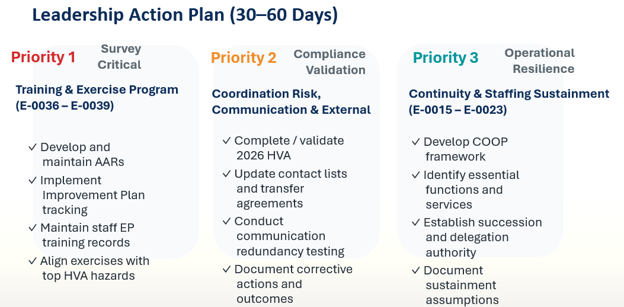
To help enrolled hospitals and nursing homes demonstrate compliance, IPRO has developed an Emergency Preparedness AI Review System (EPARS). EPARS is an innovative decision-support tool that evaluates healthcare emergency preparedness programs against CMS Appendix Z, the emergency preparedness interpretive guidance and survey standards contained within the CMS State Operations Manual, and Emergency Preparedness E-Tags. By analyzing submitted plans and supporting documentation, the system identifies strengths, compliance gaps, and survey vulnerabilities. Based on its analysis, the system generates executive summaries, compliance scorecards, risk dashboards, and targeted corrective action recommendations. All AI-generated findings are reviewed and validated by IPRO Emergency Preparedness Directors to ensure accuracy, regulatory alignment, and practical applicability.
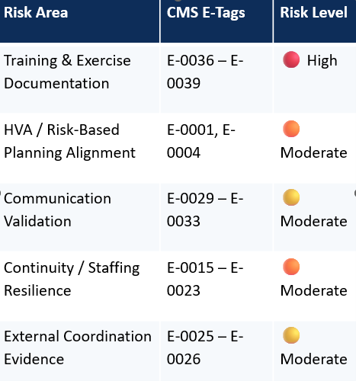
EPARS is being used across the Northeast and Mid-Atlantic CMS QIN-QIO (Regions 1 and 2) to provide both operational and leadership value by assessing key preparedness domains, including risk assessment, policies and procedures, communication plans, training and testing, continuity planning, evacuation procedures, and external coordination. A version customized to outpatient clinical providers is under development and is expected to be deployed soon.
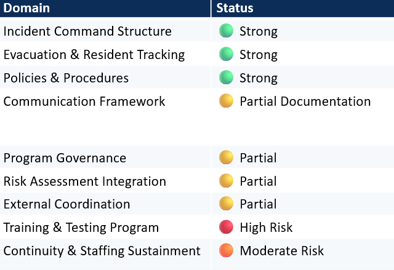
(Left) CMS Appendix Z Readiness Dashboard as provided in the EPARS summary document.
By linking findings directly to CMS E-Tags and identifying priority improvement opportunities, the AI Review System helps hospitals, long-term care facilities, and soon to be included, outpatient providers strengthen compliance, improve survey readiness, and enhance overall emergency preparedness program performance.
ROI
Through the use of a customized AI agent, EPARS saves time for both providers and QIN staff, ensures consistency in evaluation of emergency plans, and saves considerable taxpayer dollars for the QIN program. Automating the process reduced average review time by 71.4%, reducing the time required to review each plan from 3.5 hours to 1 hour. The total net savings through the remainder of the QIN-QIO contract period is expected to be $506,580.
Disclaimer
Hospitals and nursing homes that use EPARS understand that the review provides informational support based solely on the documents submitted and is not legal, regulatory, or clinical advice. Providers should verify findings and recommendations as they are ultimately responsible for confirming CMS requirements as well as state and local emergency preparedness regulations.
For Additional Information
To learn more, contact Public Health Emergency Preparedness Specialists Shane Durkee at sdurkee@ipro.org, or Jessica Picanzo at jpicanzo@ipro.org.